Warehouse Optimization: The Strategic Roadmap to Reclaim Space and Slash Operational Waste
To optimize your warehouse, start with a throughput audit, restructure your flow and slotting, streamline core processes, and compare tech options before investing.
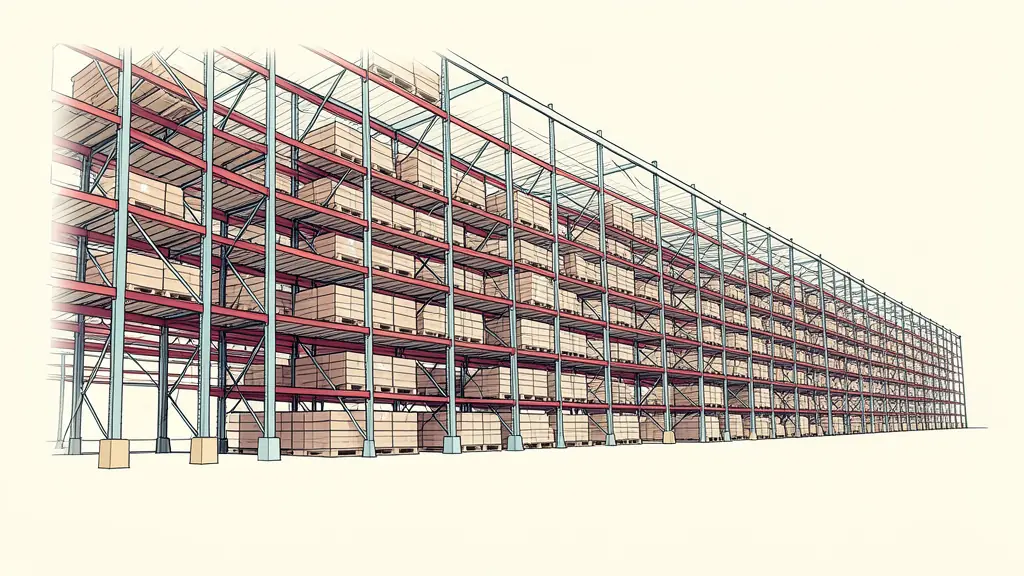
Your current warehouse layout is either a catalyst for growth or a hidden cost center draining your margins through wasted motion. Travel-time inefficiency can account for up to 50% of total picking labor costs, turning simple order fulfillment into a massive financial leak. While automation promises high returns, the primary uncertainty for mid-sized facilities is whether the volume justifies the capital expenditure or if process redesign is the faster path to profitability. To stop the bleed, you must first audit your throughput bottlenecks before moving a single rack.
Start With a Throughput Audit, Not a Floor Plan
Warehouse optimization isn’t just about moving shelves to create more room; it is the strategic alignment of space, labor, and technology to maximize flow. Many operators make the mistake of starting with a visual redesign, but aesthetics do not recover lost capital. The real starting point is a rigorous data audit to identify where material flow stalls and where labor is wasted.
Identifying the ‘Silent Bleed’ / Mapping the Current Value Stream
The « silent bleed » occurs in the gaps between documented processes. When workers take circuitous routes to pick a single order, you are paying for movement, not productivity. By mapping the current value stream, you can pinpoint these bottlenecks and determine if a warehouse layout redesign is actually necessary or if the issue lies in poor process discipline.
To quantify these losses, you must track the exact path of your most frequent orders. If your high-velocity items are stored in the back of the facility, your labor cost per order spikes. This is the same logic used to stop operational leaks in procurement: you cannot fix what you have not measured.
Optimize Space and Flow in the Correct Order
Reclaiming space does not always require expanding your footprint. Retrofitting an existing site is often a more cost-effective alternative to costly additions. The goal is to increase space utilization by analyzing inventory velocity and reducing the physical distance traveled during order fulfillment.
Strategic Slotting and ABC Analysis / Redesigning the Picking Path
Effective slotting begins with an ABC analysis, where « A » items are your fastest-moving SKUs, « B » are medium, and « C » are slow-moving. By placing « A » items closest to the shipping docks and optimizing the pick path to eliminate backtracking, you directly reduce labor hours.
To execute this, follow these steps:
1. Analyze order history to categorize SKUs by velocity (ABC analysis).
2. Use dimensioners to record the exact size and weight of every product.
3. Map the most frequent pick paths to identify congestion points.
4. Reassign slot locations based on frequency of access.
5. Implement a one-way flow system to prevent traffic jams in narrow aisles.
A rigorous WMS implementation can automate this process, providing real-time data on where items should be placed to minimize travel time. Without this data, you are guessing, and guessing leads to inefficient layouts that plateau your growth.
Streamline Core Operational Processes
Friction in the warehouse lifecycle often manifests as « dead time » during receiving or errors during packing. If your put-away process is disorganized, items sit on the dock too long, creating bottlenecks that delay order fulfillment and compromise inventory accuracy.
Receiving and Put-Away Efficiency / Packing and Shipping Accuracy
The put-away process should be a seamless transition from the loading dock to the designated slot. By implementing a standardized verification process at the point of entry, you eliminate the « search time » that plagues disorganized facilities. This ensures that every item is exactly where the system says it is, which is the foundation of operational stability.
Integrating slotting optimization into the packing phase ensures that the most frequently paired items are stored near each other. This reduces the number of trips a picker must make to complete a single order. When combined with quality control checks at the packing station, you reduce the rate of returns and improve the overall cost-to-serve.
Compare Optimization Levers Before You Commit
Choosing the wrong lever can lead to massive capital waste. A common trap is investing in high-end robotics when the underlying process is broken; automating a bad process only makes the errors happen faster. You must balance the need for increased operational throughput with the reality of your current order volume.
The following table compares the most common optimization paths based on investment and impact.
| Lever | Cost | Implementation Time | ROI Speed |
|---|---|---|---|
| Manual Process Tweaks | Low | Fast | Immediate |
| WMS Software | Medium | Moderate | Mid-term |
| Full Automation (ASRS) | High | Slow | Long-term |
Manual tweaks, such as reorganizing the floorplan or introducing inactivity lists, provide the fastest wins. However, as you scale, the limitations of human memory and manual tracking create a ceiling. Software provides the visibility needed for agility, while ASRS and robotics are reserved for facilities with massive volumes where labor costs are the primary constraint.
Secure Your Investment and Avoid Implementation Traps
The greatest risk in warehouse optimization is regression. Without continuous monitoring, a facility often reverts to disorganized habits within six months of a redesign. To prevent this, you must treat safety and process standardization as foundational levers that support long-term stability.
Setting Performance Benchmarks / Training for Sustainability
To track your warehouse ROI, you must move beyond general observations and track specific KPIs. Order cycle time (the time from order placement to shipment) and picking accuracy are the two most critical metrics. If these numbers do not improve, your optimization plan has failed regardless of how « clean » the warehouse looks.
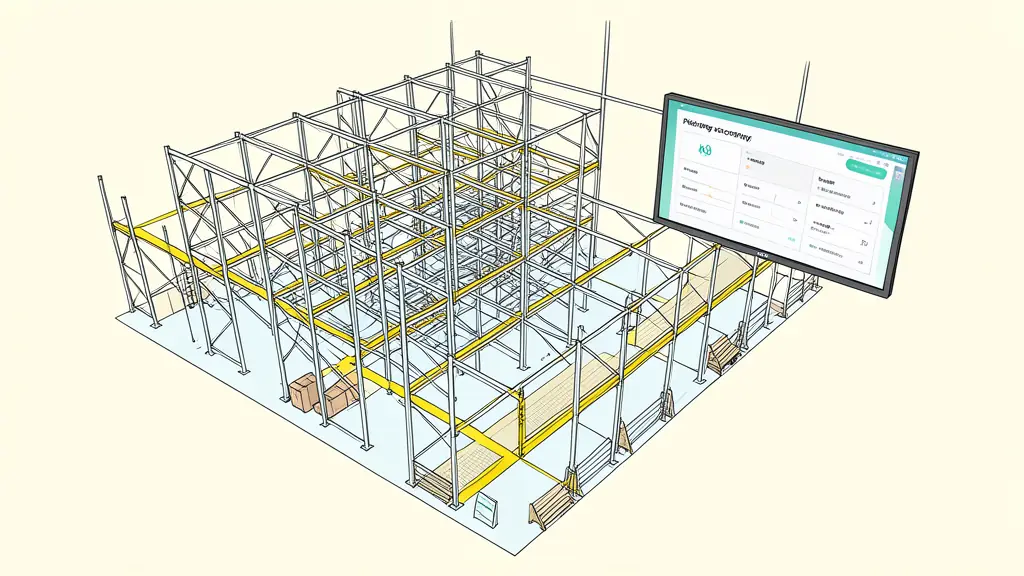
Training is the final piece of the puzzle. If the staff is not bought into the new pick paths or slotting rules, they will create their own « shortcuts » that reintroduce inefficiency. Establish a culture of continuous improvement where employees are encouraged to flag bottlenecks in real time.
Before committing to a structural overhaul, request a detailed audit from three different providers to compare their approach to data collection. Verify that any proposed WMS or ASRS integration includes a phased implementation plan and a guaranteed support period to prevent operational downtime during the transition.
Envie d'aller plus loin ?
Laisse ton email, on te prévient dès qu'un nouvel article sort.